
By Malaika Hyera, Touchstone Intern
In Patricia Williams’ exhibition Transformations and Importations, the artwork represents two distinct approaches to visualizing music. One being rooted in rigorous structural analysis and the other driven by fluid emotional and intellectual expression.
The first half of the collection approaches music through a methodical, highly analytical lens. Williams translates the individual notes of a musical score into crisp geometric forms resembling mosaic or bathroom tiles. In her piece If Only, the dimensions of these shapes correspond directly to the music's rhythmic notation. Short, rapid notes are represented by narrow, compressed strips, while sustained notes expand into broader, sweeping rectangles. Though the palette appears spontaneous, each color consistently corresponds to a specific pitch. This ensures that individual notes retain a uniform visual identity throughout the series, creating an intricate, mathematically coded system of mapped sound.
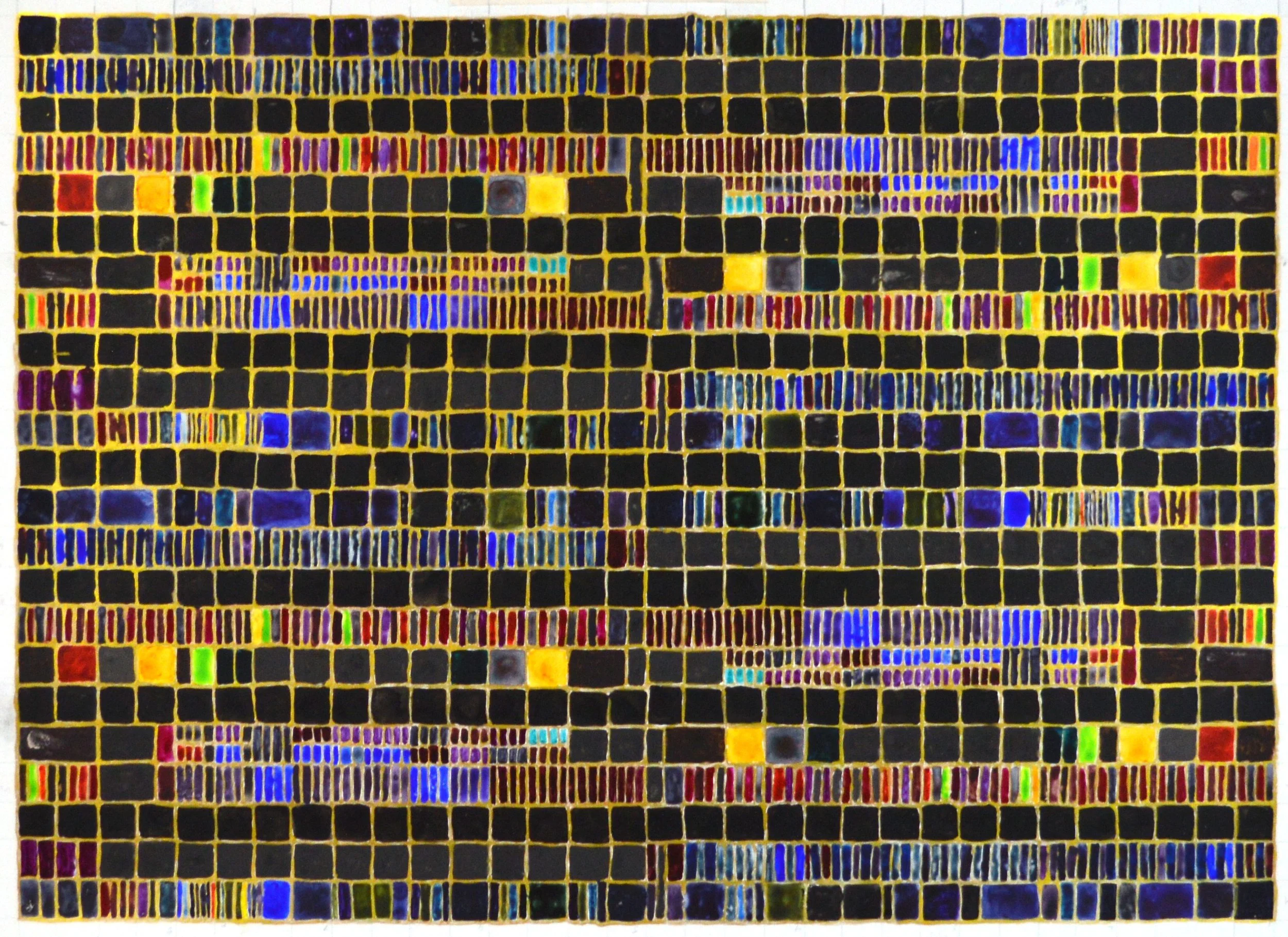
If Only By Patricia Williams
In contrast, the second half of the exhibition shifts from logical structure to sensory perception, capturing the fluid, highly subjective emotions evoked by listening. Moving away from rigid geometry, Williams employs evocative, ambient watercolor techniques. The soft, bleeding edges and lack of rigid borders mirror the immersive, fleeting nature of human feeling, offering a dynamic visual counterpoint to the calculated precision of her first series.
As Williams developed the collection, she aimed to convey not only a direct translation of sound into sight, but also how identical melodic foundations can be adapted by different artists to express radically different human experiences. This thematic tension is best illustrated by her visual exploration of shared musical motifs. In her piece Reflections, inspired by the second movement of Ludwig van Beethoven’s Sonata Pathétique, heavy, brooding washes of dark color consume almost the entirety of the paper. This dark palette reflects the song's inherent melancholy, interpreting the music as a contemplative space for regret, memory, and longing for possibilities left unrealized. In Infatuation, inspired by Billy Joel’s pop ballad “This Night,” Williams engages with a piece that famously borrows its core melody directly from the very same movement of Beethoven's sonata. Yet, instead of tragedy, Joel transforms the theme into an upbeat celebration of romantic optimism. Williams captures this thematic shift visually: where Reflections uses dense, somber tones to evoke grief and retrospection, Infatuation reimagines the shared melodic line through a bright, luminous composition that embodies the exhilaration and promise of new beginnings.
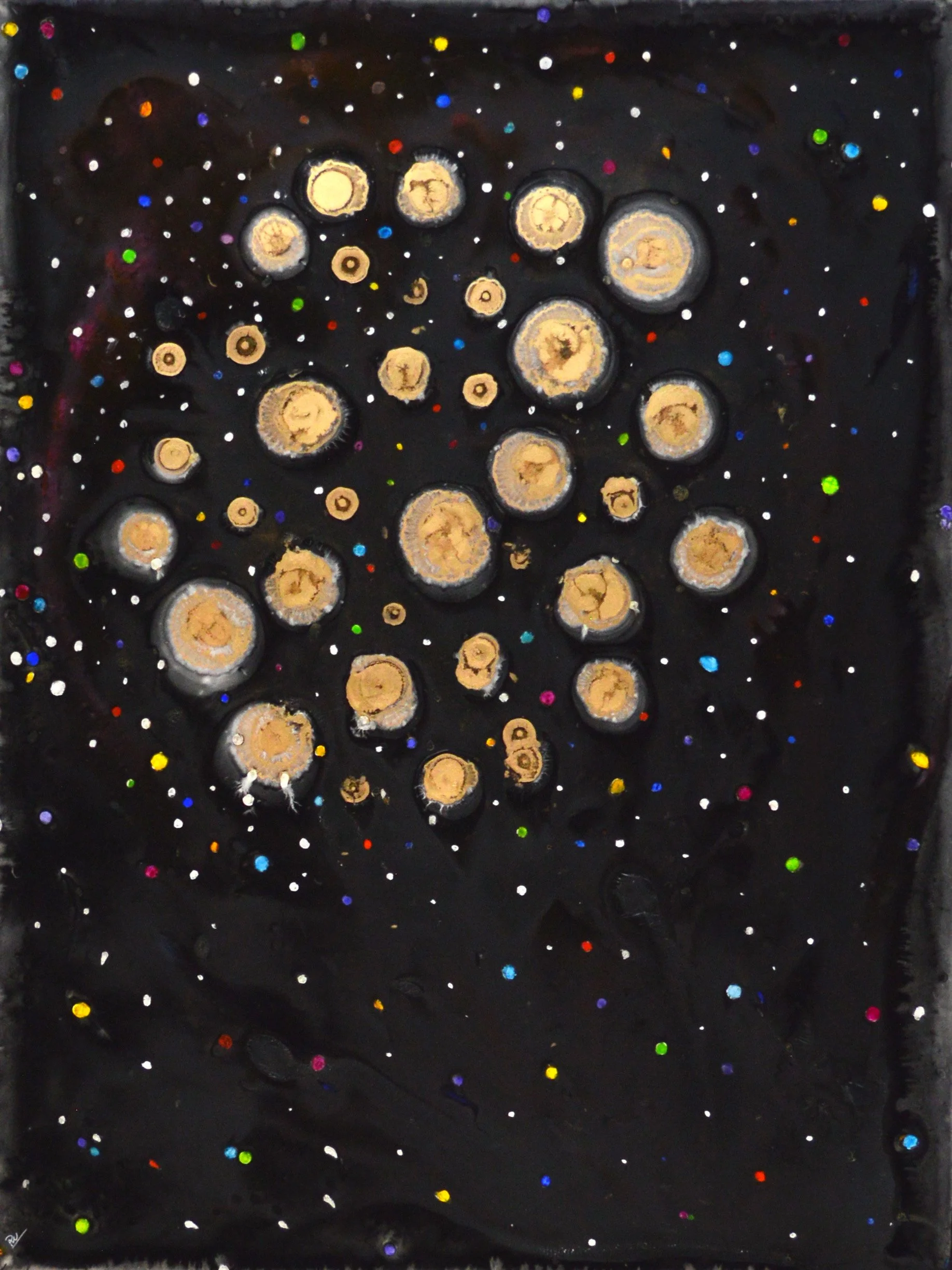
Infatuation by Patricia Williams
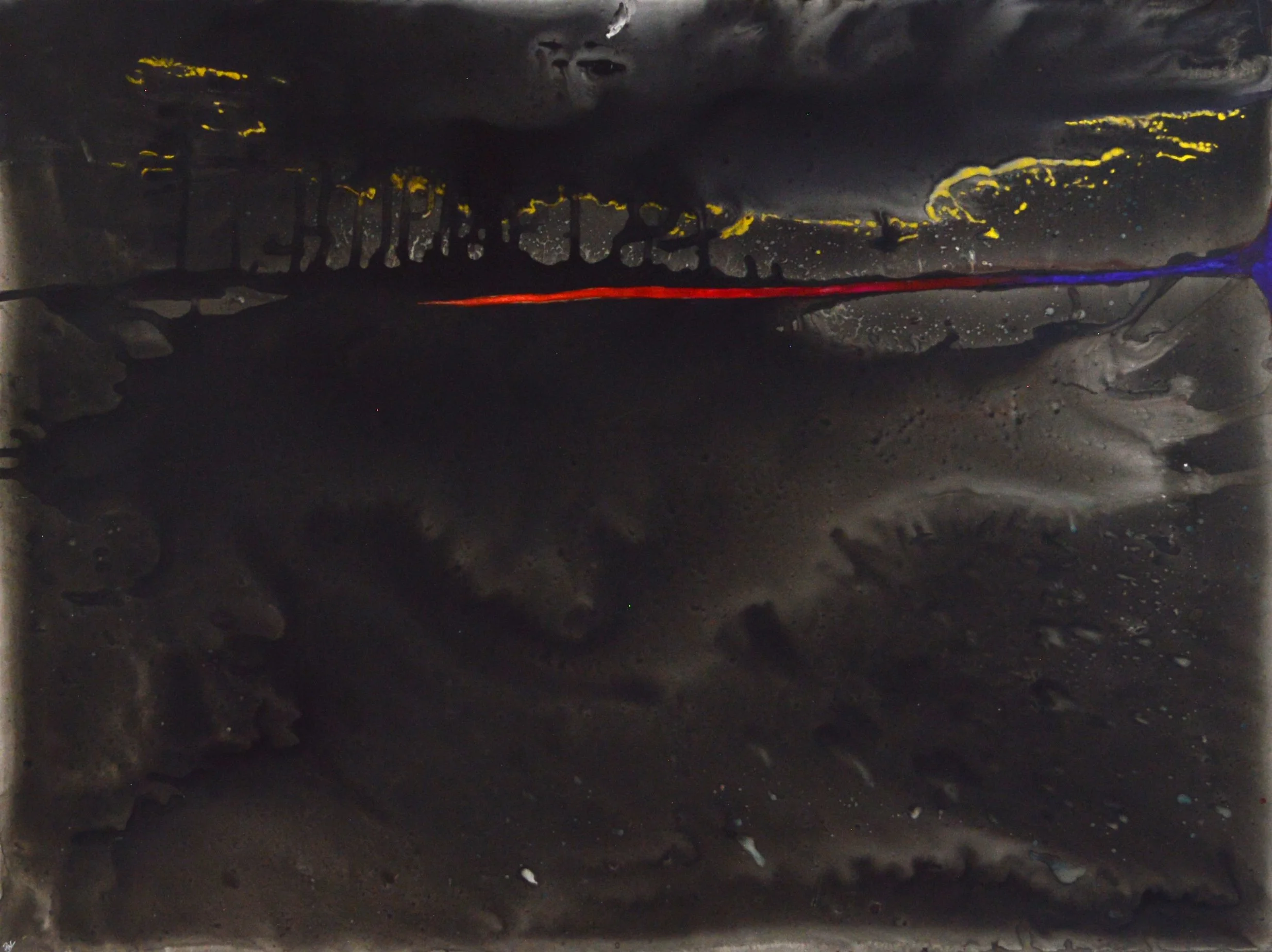
Reflections by Patricia Williams
See Transformations and Importations by Patricia Williams, on view through November 22, 2026 at Toucshtone Gallery.